







Sharing a bed should feel restful, not frustrating. If your partner moves often, sleeps warmer than you do, or prefers a different comfort level, your sleep can suffer fast. The good news is that you can fix many of these problems with the right setup.
Quick ways to improve shared sleep
Before you change your whole routine, start by checking these basics:
- Is your bed size giving both of you enough room?
- Does your mattress reduce movement transfer?
- Are heat and bedding making sleep uncomfortable?
- Are your pillows and protectors helping or hurting your comfort?
Small changes in the right areas can make a noticeable difference.
1. Start with the right bed size
A shared bed needs enough room for two people to sleep without crowding each other. If you constantly wake up when your partner turns, your bed may simply be too small.
Why bed size matters
A tight sleep space limits movement and increases disturbance. You need room to change position without pushing into the person next to you.
A double bed might be too small
A double bed can work for some couples, but it often feels restrictive over time. If you want more personal space, a queen or king usually makes daily sleep easier.
Upgrade to a queen or king size
Queen beds suit many main bedrooms. King beds work well if you both want more room, one of you moves a lot, or children sometimes climb in during the night.
If you want to compare options, browse the full range of beds for sale and view our Queen beds or King beds.

Choose support that reduces partner disturbance
Motion transfer affects shared sleep more than many people realise. If one person tosses and turns, the other person often feels every movement.
Look for better motion isolation
A mattress with stronger motion control helps one sleeper move without disturbing the other. This matters if your schedules differ or one of you wakes easily.
Support still matters
Comfort alone is not enough. You also need support that keeps your body aligned and helps reduce pressure build-up through the night.
Compare trusted brands carefully
Brands like Sealy, Edblo, Simmons, Cloud Nine and Rest Assured offer different comfort feels and support levels. Compare them based on how you actually sleep, not only on price.
Match your bed to your sleep habits
Your sleep setup should reflect real life. Think about heat, bedtime routines, body weight, and how often one person gets up.
Sleeping hot?
Choose breathable bedding and avoid trapping too much heat around the body. A cooler sleep surface helps both people rest better.
Light sleeper?
Prioritise stable support, less movement transfer, and enough space to move independently.
Different comfort levels?
This usually means you need expert guidance instead of guessing. A better match saves you from expensive trial and error.
Do not ignore your pillows and protectors
People focus on the mattress only, but the full sleep setup matters. Small add-ons often make a noticeable difference.
Pillows affect neck and shoulder comfort
The wrong pillow can make a good mattress feel disappointing. You need the right loft and support for your sleep position.
Do not ignore your pillows and protectors
A quality mattress protector helps guard against spills, stains and daily wear. It also supports long-term care.
Shared beds need easier maintenance
Beds that are used every night by two adults naturally need more care. Easy-to-clean, protective layers can help keep the sleep environment fresher and make long-term maintenance more manageable.
Know when the mattress is the problem
Sometimes, poor shared sleep is not about routine. It is about an old or unsuitable mattress.
Signs your mattress may be the issue
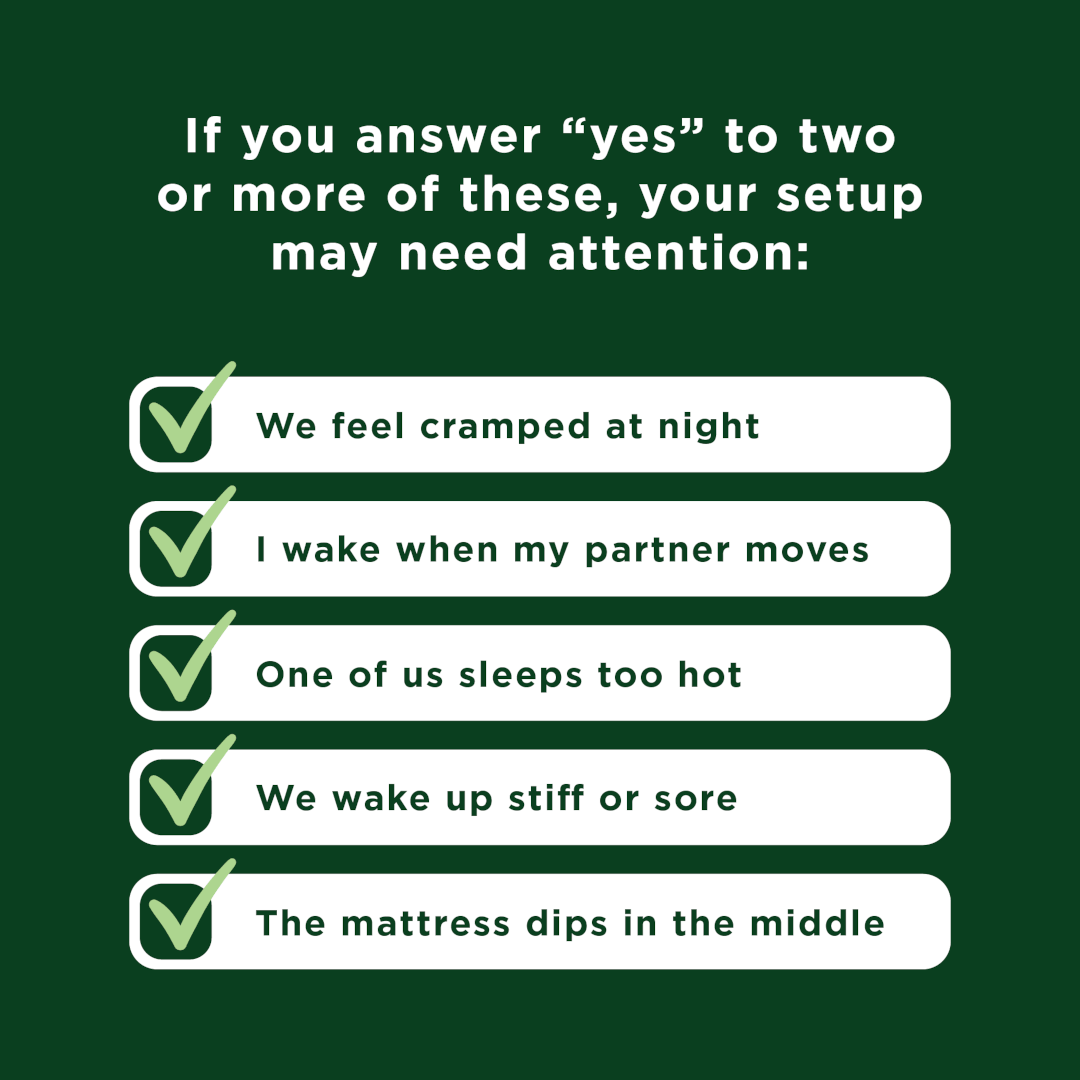
If you roll towards the centre, notice weaker edges, or wake up feeling stiff, sore or unrested, your mattress may no longer be giving you the support you need.
Why replacing at the right time matters
An old or unsuitable mattress can affect both sleepers. Replacing it at the right time can improve comfort, reduce movement disturbance and support better-quality sleep overall.
Build a better shared sleep routine
Your bed matters, but your habits matter too. A few changes can reduce tension around sleep.
Keep your room calm and consistent
Limit bright light, noise and late-night stimulation before bed. A calmer space helps both of you settle faster.
Talk about comfort honestly
Do not wait until both of you feel exhausted. Discuss space, firmness, temperature and sleep interruptions early.
Fix the setup, not only the symptoms
If sleep keeps going wrong, look at the bed size, mattress support and bedding together. That gives you a more complete solution.
FAQ Section:
How do I sleep better if my partner moves all night?
Choose a mattress that reduces motion transfer, make sure your bed is large enough, and use pillows that support your sleep position.
Is a double bed big enough for two adults?
It can work, but many couples sleep better on a queen-size or king-size because they get more personal space.
What bed size is best for couples in South Africa?
A queen is a practical choice for many couples. A king suits couples who want extra space or move around a lot.
Can the wrong mattress affect both partners?
Yes. Poor support, weak edges and high motion transfer can disturb both sleepers.
Do mattress protectors help shared beds?
Yes. They help with hygiene, spills and daily wear, especially when two people use the same bed every night.
Which brands should couples consider?
Sealy, Edblo, Simmons and Rest Assured all offer options worth comparing based on support, comfort and budget.